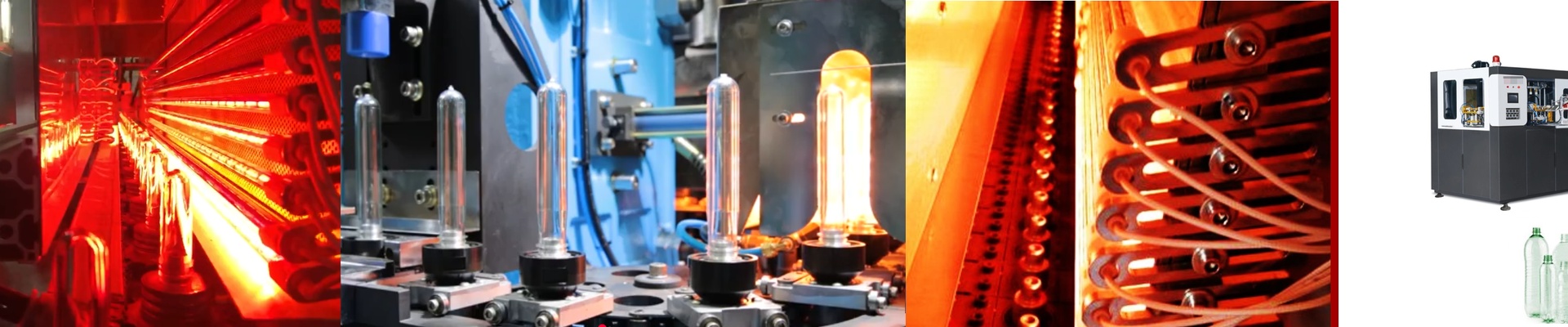
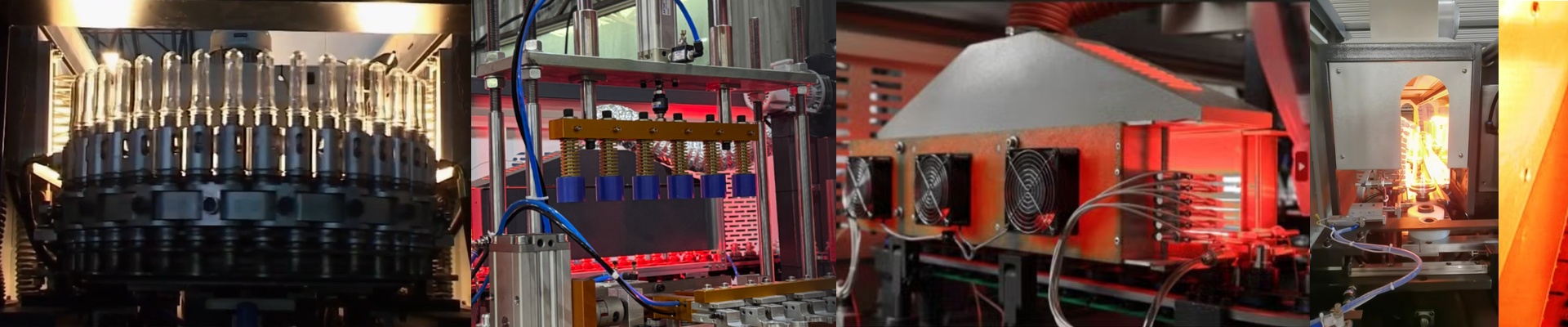
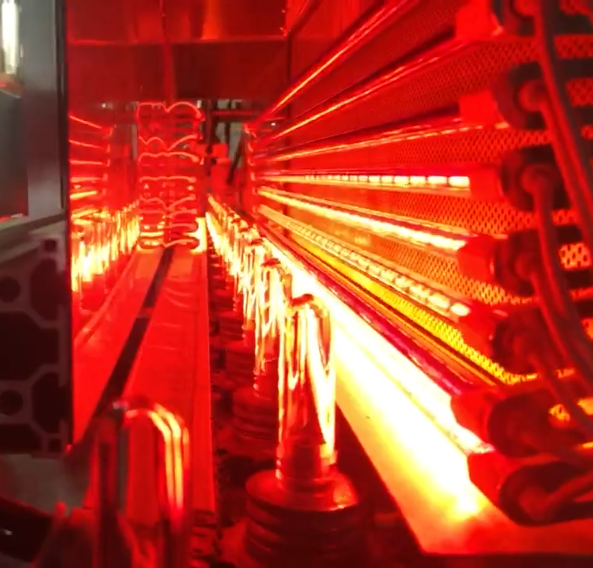
On the line, a Sidel stretch blow molder needs one thing above all: repeatable preform heating, shift after shift. When reflector plates start to lose focus or sag, you end up with uneven temperature across the preform wall. Then the blow station fights you—thick in spots, thin in others, and rejects piling up.
What matters, technically
We build the Sidel blow molder reflector plate to match the heating tunnel geometry of Sidel machines. The coatings are high-reflectivity, tuned to short-wave infrared halogen emitters. The shape holds the focal distances exactly, so the energy lands where it should—on the preform shoulder and body—instead of bleeding onto the neck or rails. We stick to standard lamp interfaces, like R7s connectors, and match the OEM power and voltage requirements. That way the emitter and reflector behave as one thermal system, not a mishmash of parts thrown together.
Why this matters in real PET stretch blow molding
In PET stretch blow molding, heating uniformity is what controls stretch behavior and, straight-up, bottle quality. When the reflector keeps its shape and reflectance, you get a tighter temperature spread across the preform. That translates into more consistent wall thickness, fewer pinholes, and less over-pressurization just to make the bottle set. The stability also lets you hold faster cycle rates without chasing hot and cold spots, and you waste less energy because the infrared output stays aimed where it needs to be.
The details that make it work
Installation is straightforward, but alignment is where the job lives or dies. The reflector has to sit on the OEM focal line and be secured without warping—even a small bow will throw off the heat pattern. Before you swap anything, check the emitter age and output. Aged lamps can make a good reflector look weak. And keep the reflector surface clean—dust and bottle residue will cost you. The coatings do their job best when they’re maintained.